


The Carbon Of Christmas
- Sarah S.

- Jan 1, 2020
- 5 min read
A review of the past decade and a look into 2020.
Christmas has always been viewed as one of the most environmentally taxing times of the year, especially in the western world where both consumerism and waste are extremely high. However, with growing environmental movements in 2019 around the world, we may be able to curb the worst effects of the holiday season. We may not be there yet, but let’s aim for a more sustainable holiday season in 2020!
A REVIEW OF THE PAST DECADE
It is unlikely for change to happen overnight, especially for such a large event which is surrounded by so many traditions. However, reflecting upon the impact of these events and becoming conscious of the impact of our actions is a necessary first step.
Over the last few decades, Christmas has become increasingly wasteful, undoubtedly due to the growth in its commercialisation across the globe. For example, 3 days of Christmas celebrations in the UK equates to 5.5% of its total annual carbon emissions. This can be seen in the adoption of the celebration within non-Christian communities, such as mainland China in which Christmas has gained popularity as a major commercial event. Even without much research, the effects of this on the environment appear obvious.
Christmas, historically, has always been very closely related with food. In the UK, the 370 million mince pies and 10 million turkeys consumed on average each year displays how the nation eats 80% more food during the Christmas season than any other time of year. In fact, it may be inaccurate to claim that this food is being eaten as 35% of the population admits to throwing away more food over Christmas than any other time of year. The 230,000 tonnes of food waste directly pollutes the environment, but what about the carbon implications? This often overlooked factor contributes the most to climate change, as food must be grown, transported and stored - producing large amounts of emissions at each stage. Even without the Christmas period, the UK faces extremely high food miles, which have doubled since 1974. The University of Manchester calculates that the UK’s combined Christmas dinners produce the same carbon footprint as a single car travelling 6,000 times around the world. From 2010-2019, this pattern has unfortunately continued:
And it’s not just food; wrapping paper, decorations and unwanted presents are only a few more examples of why this is viewed as one of the most wasteful times of year. Nor is this specific just to the UK. Phs claims that humanity wastes one-third more over Christmas than any other time of year.
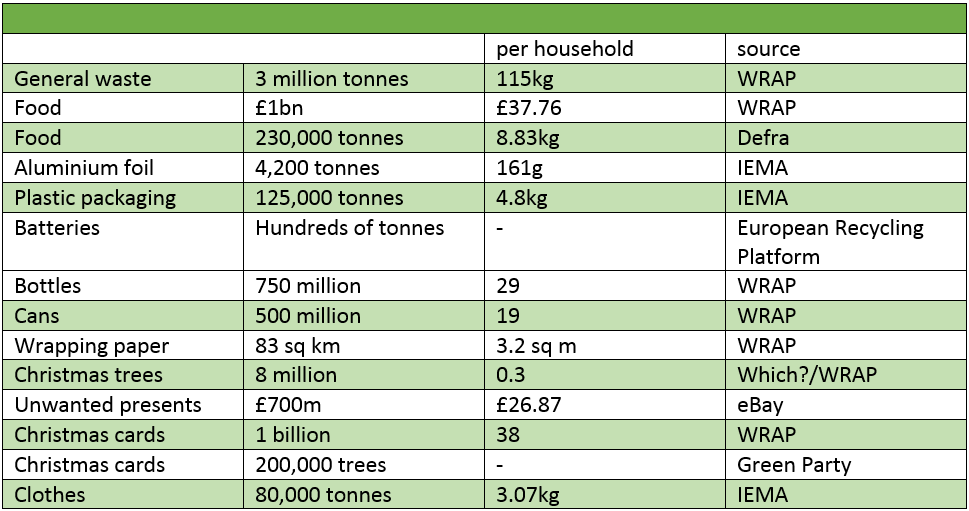
In addition to the climate impacts, the sustainability of Christmas causes some concerns. Environmentally, it is difficult to see how these traditions could be continued for much longer without dire impacts on society as a whole. For example, 8 million trees are cut down annually for decorations in the UK. Moreover, the amount of plastics produced for children’s toys is immensely unsustainable when considering the finite oil remaining in the world required for the 41% of toys being thrown to landfill in the UK by March, alongside 100,000 tonnes of plastic packaging.
Socially, Christmas is incredibly unsustainable too. The atmosphere appears superficially merry and bright however, however the truth is more eerie. The amount of cultural value given to such an occasion is shocking. For example, the massive countdown and excitement for the release of adverts in the UK (such as John Lewis and Sainsbury’s) is an example of the emotive marketing which runs rampant during the festive season. Overindulging in food, objects, expenditure and countless other normally-questionable decisions are not only considered suddenly acceptable, but are even encouraged. An uncomfortable atmosphere of consumerism is placed on a pedestal to create a society in which materialism and instant gratification are valued more and more each year with three-quarters of UK adults wanting to receive physical gifts, despite claiming to prefer experiences.
What are the implications of this?
There are obvious environmental ones of course; as demand for lavish celebrations can only increase, the waste and emissions produced will too. However, it also worryingly may trap us in a materialistic mindset wherein we not only lose the ability to change our ways environmentally, but also the ability to appreciate the more subtle joys which should define Christmas.
A LOOK INTO 2020
Does that mean we should boycott Christmas and enjoy frugal lives without celebration? Of course not. Christmas is still an incredibly important festival, even for those who aren’t Christian, as it is a time of social solidarity where people can relax and have fun. It may be easy to fall into the trap of blaming Christmas celebrations for destroying the world, however the festive season does also encourage generosity and tolerance. From 2011-2018, the UK donated the most to charity during November with an average of £1.98 million raised, followed closely by December in second place with an average of £1.96 million. This generosity also extends to the environment, with charities such as Trees for Cities being promoted.
Christmas might actually be the best place to start making changes if we want to normalise sustainable celebrations.
There are many ways to reduce the environmental impact of Christmas which can make their way into annual traditions. From simple swaps (such as reducing the amount of meat in your Christmas dinner) to more creative festivities (such as recycling Christmas cards by making next year’s tags from them), there are many ways to spend an Eco-friendly Christmas.
Reduce energy used for heating by wearing thick Christmas jumpers
Switch to more efficient LED Christmas lights
Calculate the right amount of food to make and use the leftovers to reduce waste
Reuse wrapping paper, when possible
Skip Christmas crackers, or get ones without the plastic toys and recycle the paper
A real, pot-grown Christmas tree can be removed from the pot and planted outside
If you have an artificial tree, use it for over 10 years and recycle it properly
Do your Christmas shopping online to reduce the chances of impulse buying
Think carefully about your gifts - don’t get things for the sake of giving a present. Make sure that they would actually use it.
Buy ethical gifts by looking into how the product is manufactured (for example, The Ethical Superstore)
Gift experiences such as cinema tickets or gym memberships etc.
Good quality toys can be passed down the generations and won’t be thrown out
Avoid air travel and try carpooling or using public transport
Although it is a while away from now, we should make whatever progress we can, however small, to ensure a less environmentally damaging Christmas in 2020. Moreover, creating these good habits now will prevent us from getting even more wasteful in the future.

Comments